Import GPU: Python Programming With CUDA

بت یک
Every few years, a new development in computing leads to significant changes and the need for specialized workers to harness the new technology. Whether it was COBOL in the 60s and 70s, HTML in the 90s, or SQL in recent years, there's always something new to learn in the computing world. The introduction of graphics processing units (GPUs) for general-purpose computing is one of the most important recent advancements. If you want to develop new Python skills to leverage modern technology, check out this introduction to CUDA, which allows developers to use Nvidia GPUs for general-purpose computing.
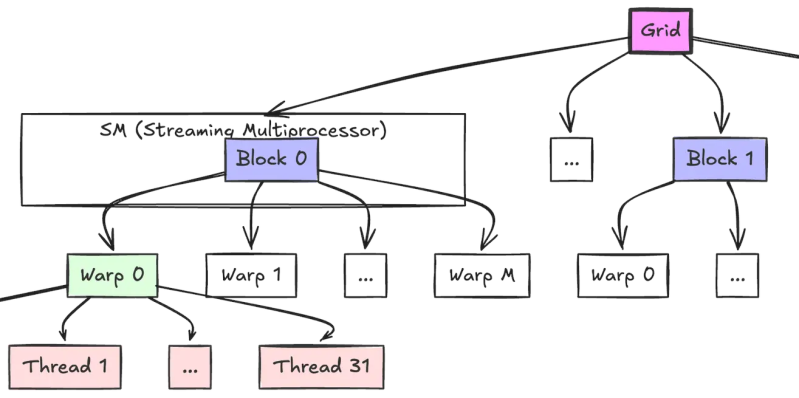
Of course, CUDA is a proprietary platform and requires one of Nvidia’s supported graphics cards to run. But once you have that, it's not much more effort to use it for non-graphics tasks. The guide takes a closer look at the open-source library PyTorch, which helps Python developers quickly learn the features of CUDA that attract researchers and developers in artificial intelligence, machine learning, big data, and other cutting-edge areas of computer science. The guide explains how threads are created, how they move within the GPU and work with other threads, how to manage memory on both the CPU and GPU, create CUDA kernels, and handle everything else, mainly through Python.
Starting with something like this is almost necessary to stay relevant in the fast-paced world of computer science, as machine learning has become central to nearly everything related to computers today. It’s important to note that you don't strictly need an Nvidia GPU for this kind of GPU programming; AMD has a GPU computing platform called ROCm. However, despite being open-source, it still lags behind Nvidia in adoption rates and arguably in performance. Some other learning tools for GPU programming we've seen include a puzzle-based tool that shows some of the specific problems GPUs are great at solving.


